How to Choose the Right Metal for Jewelry?
Choosing the right metal for your jewelry is very important because it affects how long it lasts, how much it costs, and how comfortable it is to wear. Some metals are better for sensitive skin, while others are stronger and last longer.
It’s good to know the different types of metals, like gold, silver, platinum, and titanium. Each one has its own benefits, and picking the right one will help you get the best jewelry for your needs and style.
You Will Learn
Precious Jewelry Metals
Gold
Purity Levels:
- 24K: Pure gold, very soft, not ideal for everyday wear.
- 18K: 75% gold, more durable, common for fine jewelry.
- 14K: 58.3% gold, strong and more affordable.
- 10K: 41.7% gold, very durable but less shiny.
Colors:
- Yellow Gold: Traditional, classic look.
- White Gold: Modern, often mixed with palladium or nickel.
- Rose Gold: Warm, pinkish hue, trendy and romantic.
Pros: Long-lasting, valuable, hypoallergenic in higher karats.
Cons: Expensive, softer in higher purity levels.
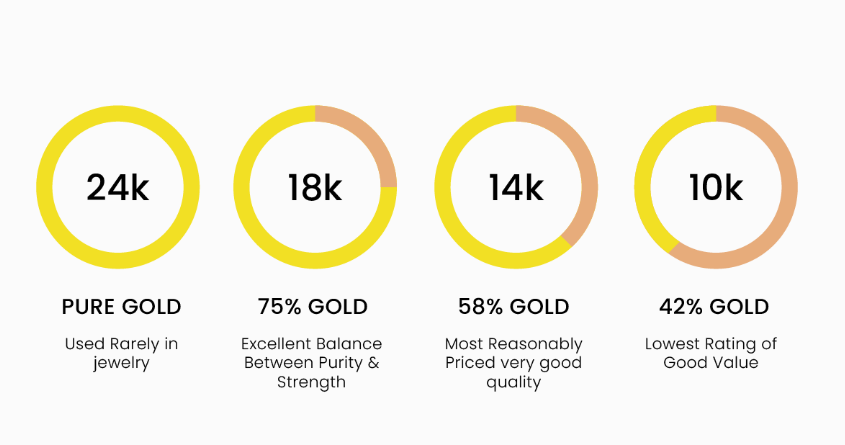
Source: Gold Purity Levels Comparison
Comparing Table 10k, 14k, 18k and 24k Gold
| Gold Type | Gold Content | Suitability for Jewelry | Color | Durability | Allergies | Price |
|---|---|---|---|---|---|---|
| 10K Gold | 41.7% gold | Earrings, budget-friendly | Polished | High | Possible | Lower |
| 14K Gold | 58.3% gold | Wedding rings, daily wear | Rich | Very high | Possible | Moderate |
| 18K Gold | 75% gold | High-end jewelry | Rich yellow | Soft | Likely | Higher |
| 24K Gold | 100% gold | Not recommended for jewelry | Bright yellow | Very soft | Likely | Highest |
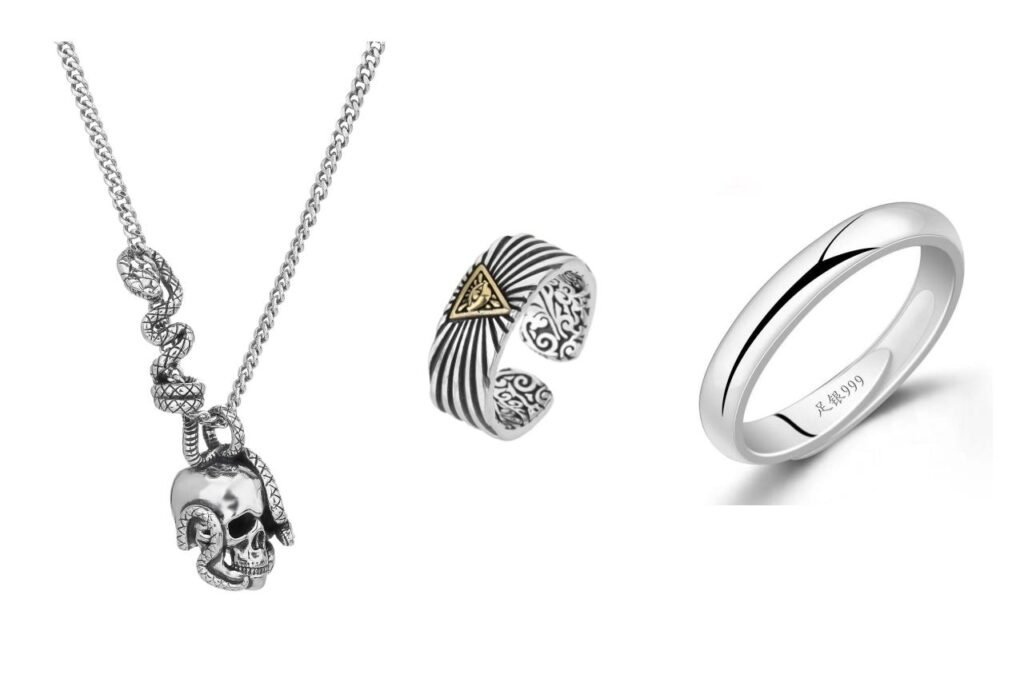
Silver
Types:
- Sterling Silver: Made up of 92.5% silver and 7.5% other metals, usually copper. This blend makes it more durable than pure silver but can tarnish over time.
- Fine Silver: 99.9% pure silver. It’s softer and more prone to scratches and dents, making it less common for everyday jewelry.
Durability and Care:
- Sterling silver is strong but can tarnish when exposed to air and moisture. Regular cleaning with a silver polish cloth or mild soap and water helps maintain its shine.
- Fine silver is softer, so it needs to be handled with care to avoid damage.
Pros:
- Affordable compared to gold and platinum.
- Has a bright, shiny appearance that complements most styles.
- Hypoallergenic (in its pure form).
Cons:
- Tarnishes over time (especially sterling silver).
- Softer metals like fine silver are more prone to scratches and dents.
Platinum
Features and Properties:
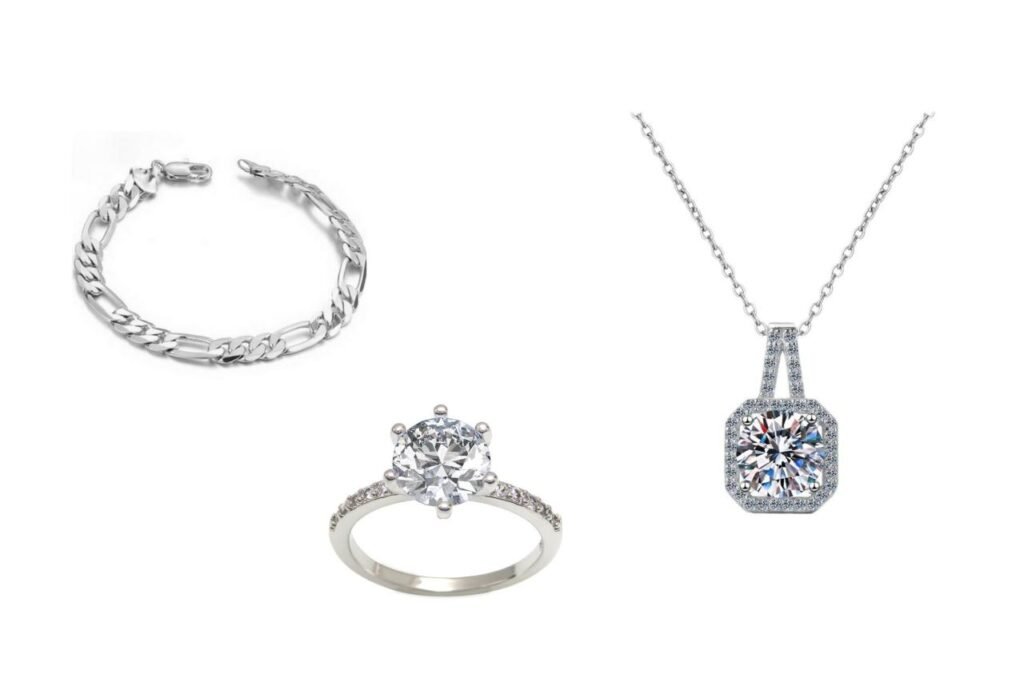
- Platinum is one of the rarest and heaviest precious metals used in jewelry.
- It’s naturally white, highly durable, and resistant to tarnish.
- Platinum is hypoallergenic, making it ideal for people with sensitive skin.
- It doesn’t lose metal over time, unlike gold, which can wear down slightly.
Cost Comparison with Gold:
- Platinum is generally more expensive than gold because of its rarity and density.
- It requires more labor to work with due to its hardness, adding to the cost of platinum jewelry.
- However, since platinum is denser, jewelry made from platinum can feel heavier than gold pieces of the same size.
Pros:
- Extremely durable and long-lasting, perfect for daily wear.
- Hypoallergenic, great for sensitive skin.
- Maintains its color and doesn’t require regular re-plating like white gold.
Cons:
- Higher cost compared to most other metals, including gold.
- Can get scratched over time, though scratches often develop into a patina that many people find appealing.
Palladium
Similarities to Platinum:
- Palladium is part of the platinum group of metals, so it shares many of the same qualities.
- Like platinum, palladium is naturally white, hypoallergenic, and very durable.
- It is also resistant to tarnish and corrosion, making it suitable for long-lasting jewelry.
Alternative/Non-Precious Jewelry Metals
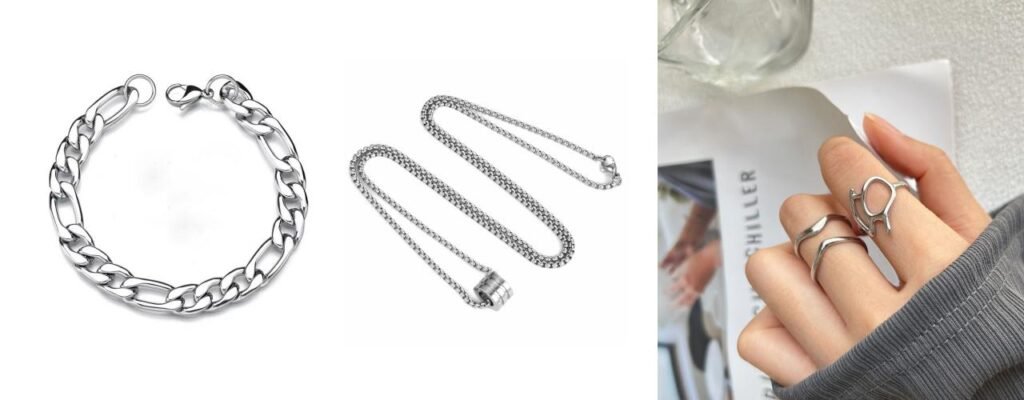
Stainless Steel
Stainless Steel is a popular metal choice in jewelry due to its strength, affordability, and resistance to rust and corrosion. It has a sleek, modern appearance, making it a favorite in fashion jewelry and watches.
Types of Stainless Steel:
- 304 Stainless Steel: This is the most common type of stainless steel used in jewelry. It contains 18-20% chromium and around 8-10.5% nickel, which gives it excellent resistance to rust and tarnish. It’s durable and affordable, making it a go-to choice for many manufacturers.
- 316L Stainless Steel: Often referred to as surgical steel, this grade of stainless steel is commonly used for body piercings and high-end jewelry. It has higher corrosion resistance because of its additional molybdenum content (2-3%), which makes it more resistant to harsh chemicals and moisture. Its hypoallergenic properties also make it a popular choice for people with sensitive skin.
- 430 Stainless Steel: Contains less nickel than 304 or 316L, making it less corrosion-resistant but still suitable for certain types of jewelry where lower cost is a factor. It’s often used in lower-end jewelry that still maintains a nice look but requires more care to prevent rusting.
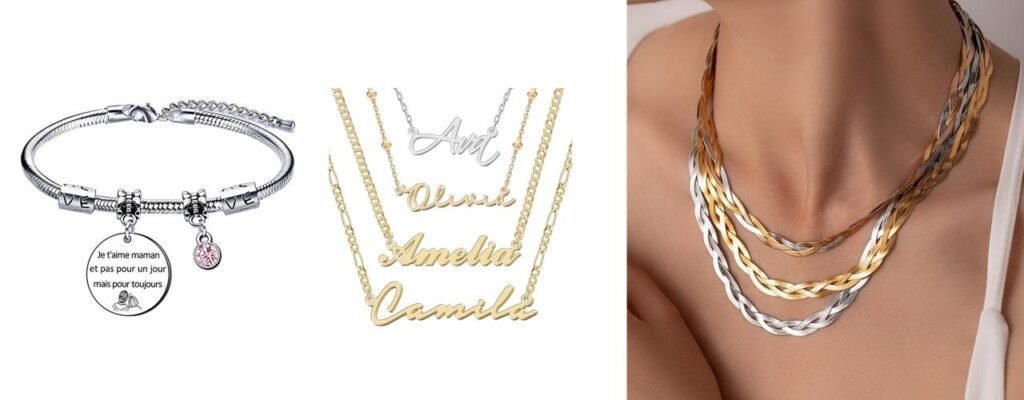
Uses in Jewelry: Stainless steel is widely used in a variety of jewelry, including:
- Watches: Stainless steel is the most common material for watch cases and bands due to its durability and ability to resist scratches.
- Chains and Bracelets: Popular in men’s and unisex jewelry, stainless steel chains and bracelets have a modern, sleek design that is both sturdy and stylish.
- Rings: Often used for men’s wedding bands due to its masculine look and ability to withstand heavy wear.
- Body Jewelry: Stainless steel, especially surgical steel (316L), is widely used in body piercings because it’s less likely to cause irritation or infection.
Brass
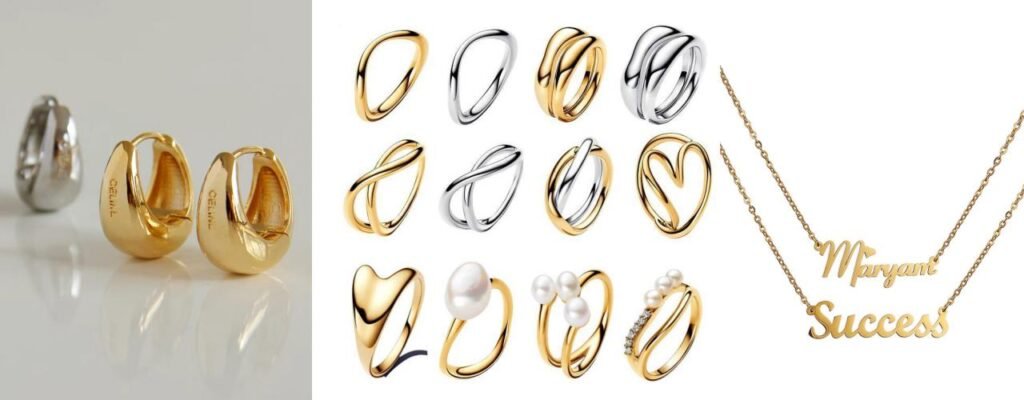
Brass is an affordable and widely used metal in jewelry, known for its warm, yellowish tone that resembles gold. It’s commonly found in costume jewelry and vintage-style pieces, offering a more budget-friendly alternative to gold while still providing a visually appealing finish.
Material Composition: Brass is an alloy made primarily of:
- Copper: The main component of brass, which gives it its characteristic reddish-yellow hue. The amount of copper in brass can vary, influencing its color and properties.
- Zinc: Zinc is added to copper to create brass, typically making up between 5-40% of the alloy. The higher the zinc content, the lighter the color of the brass, which can range from a deep yellow to a paler shade resembling white gold.
In some cases, other metals such as lead or tin may be added to improve specific properties like durability or malleability.
Uses in Jewelry: Brass is popular in many types of jewelry, particularly in:
- Costume Jewelry: Due to its affordability and attractive appearance, brass is frequently used in fashion jewelry, providing a gold-like look at a fraction of the cost.
- Vintage and Antique-Style Jewelry: Its warm tone and ability to patina (develop a darker, aged look) make brass ideal for creating pieces that have a vintage or rustic feel.
- Statement Pieces: Brass is often used in large or bold jewelry designs like chunky necklaces, earrings, and bangles, where affordability and durability are important.
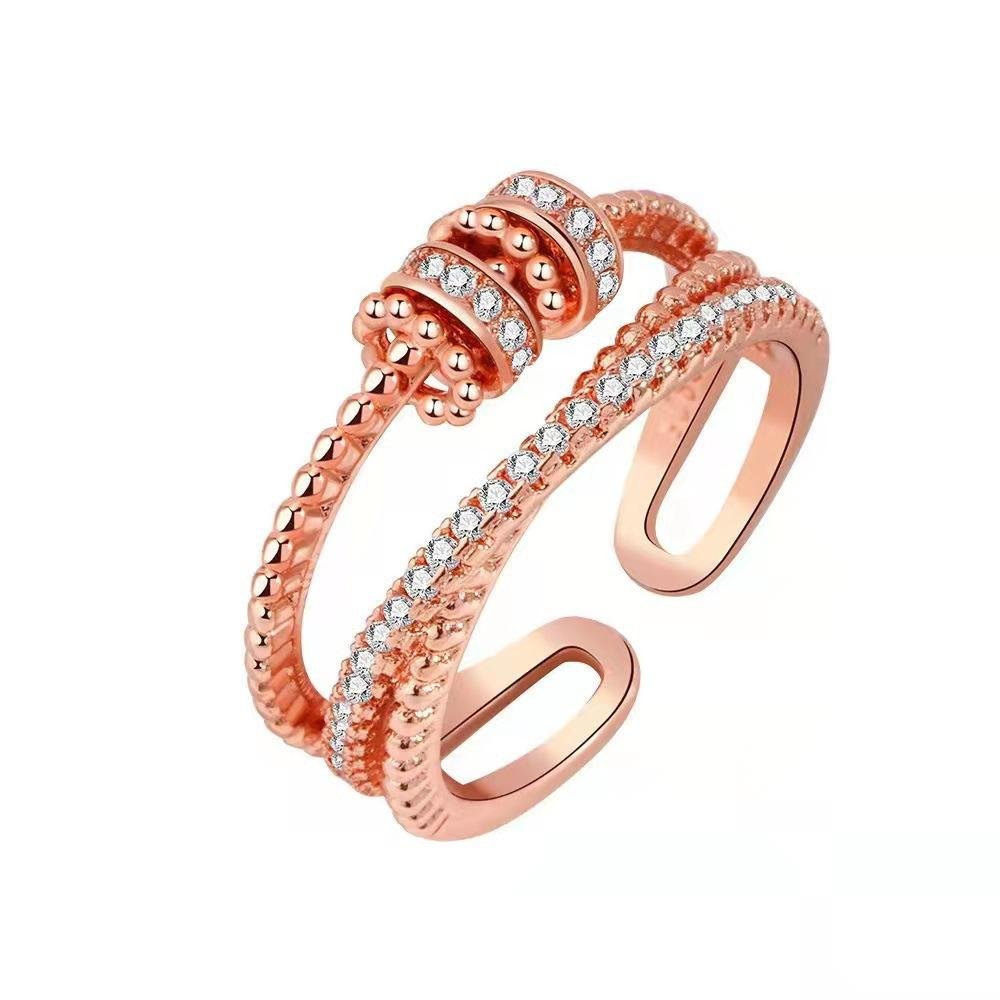
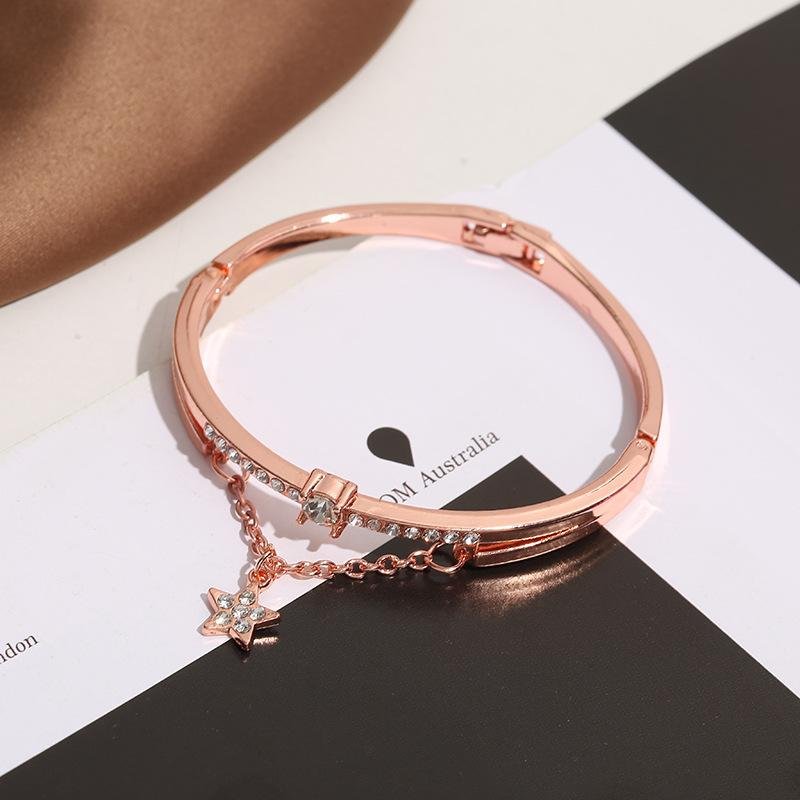
Copper
Copper is a metal with a unique, reddish-brown color, often chosen for its warm and earthy tone. It’s widely used in artisanal and vintage-style jewelry due to its distinctive appearance and historical significance. Copper has been used in jewelry for centuries and continues to be a favorite among jewelry makers and buyers who appreciate its rustic and natural look.
Material Composition: Copper is a naturally occurring metal, often found in its pure form. However, in some jewelry, it may be combined with other metals (such as in brass) to create alloys. Pure copper is soft and malleable, making it easy to shape into intricate designs.
Uses in Jewelry: Copper is favored for several types of jewelry, including:
- Artisanal and Handmade Jewelry: Due to its workability, copper is often used by artisans to create handcrafted and custom designs. It’s popular in wire-wrapped jewelry, pendants, and other unique pieces.
- Vintage-Style Jewelry: Copper’s ability to oxidize and develop a greenish-blue patina over time gives it a charming, aged appearance, making it a common choice in vintage or antique-inspired jewelry.
- Statement Jewelry: The bold color of copper stands out, making it ideal for large statement pieces such as necklaces, bracelets, and earrings.
Titanium
Titanium is a lightweight, highly durable metal that has become increasingly popular in the jewelry industry. Known for its strength, hypoallergenic properties, and sleek appearance, titanium offers a modern, minimalist look while being incredibly practical for daily wear.
Material Composition: Titanium is a pure element, represented by the symbol Ti on the periodic table. It is often used in its pure form for jewelry, though some pieces may contain small amounts of other elements for added strength or color variation.
Uses in Jewelry: Titanium is used in various types of jewelry due to its unique properties:
- Rings: One of the most common uses of titanium in jewelry, especially for men’s wedding bands and rings, due to its modern appearance and durability.
- Bracelets and Necklaces: Titanium’s lightweight nature makes it ideal for larger pieces like bracelets or necklaces, providing comfort while maintaining strength.
- Body Jewelry: Titanium is commonly used for piercings and body jewelry because it is hypoallergenic and unlikely to cause allergic reactions.
- Watches: Titanium is often used in high-quality watches, especially for sports and outdoor wear, as it is lightweight, durable, and resistant to corrosion.
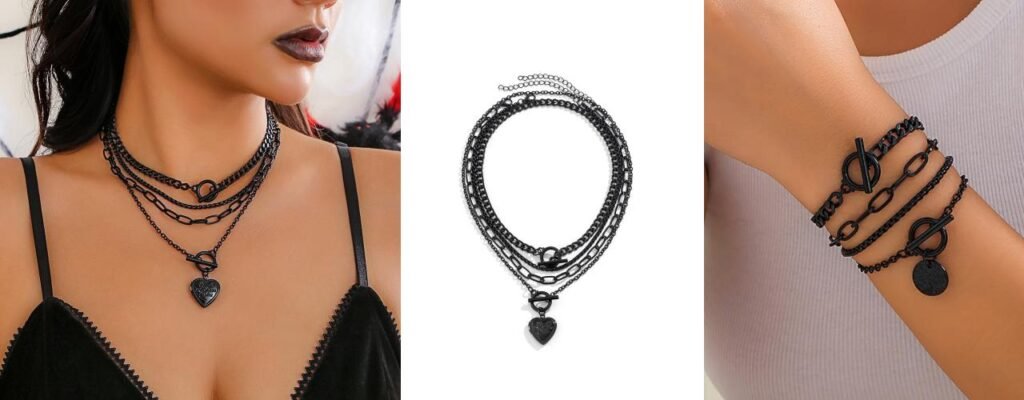
Iron
Iron is a strong, affordable metal often used in artisanal and vintage-style jewelry. It has a rugged, industrial look that appeals to those who prefer bold, rustic designs. While iron is durable, it is prone to rusting when exposed to moisture and air, which can give it a distinctive patina over time.
Alloys for Jewelry
Alloys are combinations of two or more metals to improve the properties of the original metal. In jewelry, alloys are used to enhance durability, appearance, and affordability. Here are some common alloys used in jewelry making:
Gold-plated alloy
Gold-plated alloy refers to jewelry made from a base metal (like copper, brass, or stainless steel) that is coated with a thin layer of gold. The gold layer is usually applied through electroplating, giving the piece the appearance of solid gold at a fraction of the cost.
Key Features:
- Base Metal: The core of the jewelry is typically an alloy like brass or copper, providing strength and affordability.
- Gold Layer: The gold layer is extremely thin, usually less than 1 micron thick. It gives the piece the look of gold but does not have the durability of solid gold.
- Affordability: Gold-plated jewelry is much cheaper than solid gold, making it an affordable option for those who want the look of gold without the high cost.
Copper-Nickel Alloy
Copper-nickel alloy, also known as cupronickel, is a blend of copper and nickel, often used in various industrial applications and in some jewelry. This alloy is known for its durability, corrosion resistance, and attractive silvery appearance.
Material Composition:
- Typically consists of 60-90% copper and 10-40% nickel.
- Higher nickel content gives the alloy a more silvery color, while more copper makes it warmer in tone.
Uses in Jewelry:
- Costume Jewelry: Copper-nickel is often used in affordable or fashion jewelry because of its strength and silver-like finish.
- Coins and Watches: This alloy is also common in watches and coins due to its durability and corrosion resistance.
Zinc Alloy
Zinc alloy is a versatile and affordable metal blend commonly used in jewelry making. It often includes zinc mixed with other metals like copper, aluminum, or magnesium to create a strong, lightweight material.
Material Composition:
- Primarily made from zinc, often mixed with other metals to enhance durability and workability.
- Commonly used in combination with metals like copper or aluminum for better strength and finish.
Factors to Consider When Choosing Jewelry Metals
Durability
- Metal Hardness: Harder metals like platinum and titanium resist scratches and dents better than softer ones like gold.
- Wear Over Time: Some metals (e.g., gold) can wear down, while others (like stainless steel) maintain their look longer.
Budget
- Cost Comparison: Platinum is the most expensive, followed by gold and silver.
- Affordable Alternatives: Titanium, stainless steel, and brass offer cheaper options without sacrificing style.
Skin Sensitivity
- Hypoallergenic Metals: Platinum, titanium, and surgical steel are safe for sensitive skin.
- Allergy-Prone Metals: Nickel, copper, and some alloys can cause skin reactions.
Maintenance and Care
- High-Maintenance Metals: Silver tarnishes easily, requiring frequent cleaning.
- Care Tips: Use proper cleaning methods depending on the metal type to preserve its shine and longevity.
Matching Metals to Jewelry Types
Rings
- Best Metals: Platinum and titanium are highly durable, ideal for daily wear in engagement and wedding rings. Gold is popular but softer.
- Gold vs. Platinum: Platinum is more durable and scratch-resistant, while gold offers a range of colors but may wear down over time.
Necklaces and Bracelets
- Top Choices: Gold, silver, and stainless steel are great for chains and bangles. Stainless steel is strong, while silver offers elegance at a lower cost.
Earrings
- Key Considerations: Lighter metals like titanium or silver are ideal for comfort. Hypoallergenic options like platinum and surgical steel are best for sensitive ears.
Watches and Accessories
- Common Metals: Stainless steel and titanium are widely used in watches for their durability, resistance to tarnishing, and lightweight feel.
Conclusion
If you benefit from this article, you can share with your friends or social media. You are also welcomed to send us messages if you have any doubts.
ITS Promotion is a professional supplier for promotional items. If you have any requests on customization or you want to start your own business, let’s work together.
Share This Post
Want To Get Promotional Products At Competitive Prices?
Our professional team will help you get whatever you want and finish all process.
We will provide a clear cost breakdown for your project, covering prototype creation, molding, testing, bulk orders, packaging, and shipping, along with expert advice on crafts, materials, and packaging.